The German V-2 Rocket was the spark that ignited all modern rocketry.
The V-2 or (A-4) as it was called in development was an unmanned, guided, ballistic missile used by the German military in the 2nd world war. It was part of a planned family of rockets, A1 through 12, with A12 being a true orbital rocket. Evidently only up to the A4 was completed.
It was guided by a gyroscopic system that sent signals to aerodynamic steering tabs on the fins and vanes in the exhaust. The rocket stood 14 m high and would pass speed of sound 25 sec after lift-off. it could reach an altitude of around 85km and a range of around 345 km. The V-2 carried an explosive warhead approximately 738 kg (1 ton) that could flatten a city block. By late 1941, the Research Centre at Peenemunde possessed the technologies essential to the success of the A-4.
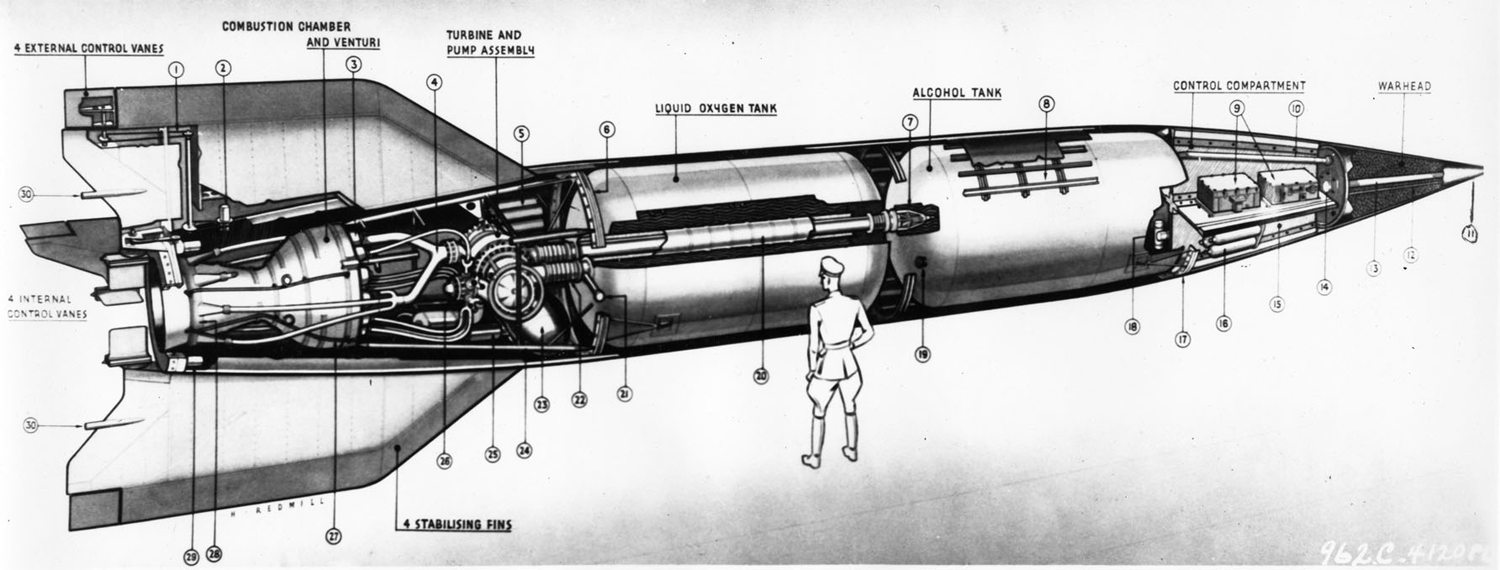
These key technologies were; large liquid-fuel rocket engines, supersonic aerodynamics and gyroscopic guidance in jet control. Getting all these elements working correctly was quite difficult and they suffered many failures.
The first successful test flight was on 3 October 1942. It was first fired operationally on Sept. 8, 1944. The V-2 offensive would last until March of 1945. Close to 2,500 rockets were launched in this time period.

I tried to recreate the historic German rocket. I painted it the black and white test variant scheme. In this flight we used a smaller C engine we I believe is the reason why the chute didn’t release. The flight had a nice arch and landed nose down in the field. When it landed, the ejection change did pop, but caused no damage. The rocket did survive with minimal damage so it is possible it will fly again, this time with the larger engine.
 HRM
HRM 